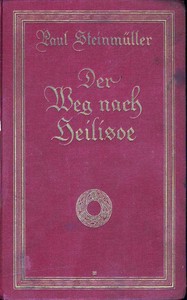
Der Weg nach Heilisoe : Roman by Paul Steinmüller
Paul Steinmüller's Der Weg nach Heilisoe is a novel that feels both of its time and timeless. Published in the early 1900s, it doesn't shout for attention but earns it through quiet, persistent observation of a soul in search of itself.
The Story
We follow Friedrich, a man weighed down by life's disappointments. He leaves his old world behind, physically and emotionally, to embark on a pilgrimage to the remote village of Heilisoe. This place exists more as an idea in his mind than a spot on a map—a symbol of sanctuary and a fresh start. His journey is arduous, taking him through the changing German countryside and into the paths of strangers: farmers, innkeepers, fellow wanderers. Each encounter, sometimes helpful, sometimes hostile, acts as a mirror, forcing Friedrich to confront who he has been and who he might become. The central question isn't really 'Will he get there?' but 'What will be left of him if he does?'
Why You Should Read It
This book won me over with its profound humanity. Steinmüller writes about loneliness, regret, and the flickering hope for renewal with incredible honesty. Friedrich is a frustrating character sometimes—he's passive, he makes mistakes—but that's what makes him feel real. You're not watching an action hero; you're walking alongside a deeply flawed person, and you start to root for his small victories. The prose, even in translation (I read an English version), has a clear, rhythmic quality that paints the landscape and the mood perfectly. It's a novel that makes you slow down and think about your own journeys, the things we carry, and what we're really looking for.
Final Verdict
Der Weg nach Heilisoe is for the thoughtful reader. It's perfect if you love classic European literature, character studies, and stories where the atmosphere is a character itself. If you're a fan of writers like Hermann Hesse or Thomas Mann, but maybe want something a bit more grounded and less philosophical, Steinmüller is a fantastic discovery. It's not a fast-paced adventure, but a contemplative, moving portrait of a man trying to find his way home, even when he's not sure where home is.
This content is free to share and distribute. It is now common property for all to enjoy.