
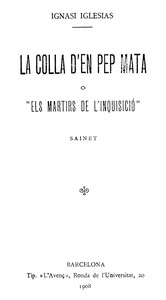
La colla d'en Pep Mata; o, "Els martirs de l'Inquisició" : Sainet by Iglesias
Let me set the scene for you. We're in a humble Barcelona tavern in the late 1800s. A group of working-class friends—the 'colla' or gang of the title—has just come back from seeing a new, controversial play about the horrors of the Spanish Inquisition. They're fired up, drinks in hand, ready to argue.
The Story
The ringleader is Pep Mata, a proud, traditional man who sees himself as a defender of the old ways. He's outraged by the play. To him, the Inquisition wasn't about torture and fear; it was a noble institution that protected Spain from chaos and heresy. His friends, however, aren't buying it. They saw the same play and were moved by its depiction of suffering. As the debate heats up, we see this isn't just about 300-year-old history. It's about their world right now. Pep's rigid defense of authority starts to feel less like patriotism and more like a personal fear—a fear of change, of new ideas, of a society where his unquestioned beliefs might be challenged. The 'martyrs' of the subtitle aren't just those from the Inquisition's dungeons; they're the new ideas being crushed by stubbornness in that very tavern.
Why You Should Read It
What blew me away was how modern this feels. Iglesias uses this simple tavern argument to crack open huge questions that we still wrestle with today: How do we deal with the ugly parts of our history? What happens when national pride clashes with historical truth? The characters feel incredibly real. Pep isn't a villain; he's a complicated man scared of losing his place in the world. His friends represent the cautious, questioning voice of a society starting to change. The dialogue is snappy and full of life, making a deep philosophical debate feel like a conversation you might overhear at a bar today.
Final Verdict
This is a perfect pick for anyone who loves character-driven stories or historical fiction that feels immediate, not dusty. If you enjoyed the ethical debates in plays like Twelve Angry Men or the vibrant, talkative atmosphere of a good Spanish tertulia, you'll find a lot to love here. It's also a fantastic, accessible entry point into Catalan literature. You don't need a history degree; you just need an interest in people, why they believe what they believe, and what happens when those beliefs are put to the test over a round of drinks.
This text is dedicated to the public domain. Thank you for supporting open literature.








Steven Perez
1 year agoVery interesting perspective.