
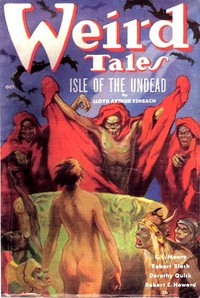
The Doors of Death by Arthur B. Waltermire
Published in 1928, 'The Doors of Death' feels like a forgotten blueprint for modern sci-fi horror. Arthur B. Waltermire wasn't a household name, but with this book, he tapped into a fear that never gets old: the terror of the unknown, especially what waits for us after our last breath.
The Story
Dr. Paul Harkness is a brilliant, obsessed physicist. He believes death is just a transition to another state of energy, and he's built a device called the 'Vibratory Spectroscope' to prove it. Think of it as a supernatural television. Against all odds, he succeeds, opening a window to the other side. But the serene afterlife he expected isn't there. Instead, he glimpses a chaotic, shadowy dimension—a 'gray world'—that seems hostile and aware of his observation. The real trouble starts when these glimpses begin to affect our reality. Shadows move wrong, a creeping chill follows his team, and the barrier between the worlds grows thin. Harkness has to face the consequences of his discovery: can he close the doors he opened, or has he doomed everyone by looking?
Why You Should Read It
What grabbed me wasn't just the spooky premise, but Harkness himself. He's not a hero; he's a proud man drunk on his own genius, and his slow-motion realization that he's made a catastrophic error is compelling. Waltermire writes the scientific process with a real sense of wonder, which makes the eventual horror hit harder. The fear here is quiet and atmospheric—it's in the description of a light casting the wrong kind of shadow, or the sudden, unexplainable drop in temperature in a sealed lab. It's less about monsters jumping out and more about the sinking feeling that the rules of the world are fundamentally broken.
Final Verdict
This is a perfect pick for readers who love early 20th-century speculative fiction—fans of H.P. Lovecraft's sense of cosmic dread or William Hope Hodgson's weird science will find a kindred spirit here. It's also great for anyone who enjoys a slow-burn psychological thriller where the biggest threat is a single, terrible idea. The prose is clear and direct (a pleasant surprise for a nearly 100-year-old novel), and the central question it poses about curiosity and its limits still rings true today. Just maybe don't read it alone in a quiet house late at night.
There are no legal restrictions on this material. Thank you for supporting open literature.
Elizabeth Davis
10 months agoFrom a researcher's perspective, the inclusion of diverse viewpoints strengthens the overall narrative. A solid investment for anyone's personal development.
David Hernandez
2 years agoThought-provoking and well-organized content.
Nancy Martinez
10 months agoThe digital formatting makes it very easy to navigate.
Sarah White
2 years agoI was skeptical about the depth of this book at first, but the evidence-based approach makes it a very credible source of information. It’s hard to find this much value in a single source these days.
William Thompson
2 months agoThought-provoking and well-organized content.