
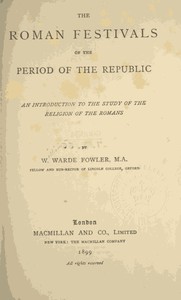
The Roman Festivals of the Period of the Republic by W. Warde Fowler
Forget dry timelines and lists of consuls. W. Warde Fowler’s The Roman Festivals of the Period of the Republic takes a different path. Instead of following powerful men, it follows the Roman calendar itself, month by month, festival by festival. Fowler reconstructs the public religious year of Rome before the emperors, showing how rituals for sowing, harvest, purification, and the dead structured everything.
The Story
There isn’t a plot in the traditional sense. The ‘story’ is the cyclical year. Fowler starts with March (the original New Year) and walks us through the festivals. We meet the Lupercalia, where young men ran through the streets striking women with goatskin strips (thought to aid fertility). We see the Lemuria, a creepy nighttime ritual where the head of the household spat black beans to appease hungry ghosts. We experience the Saturnalia, the famous December role-reversal where masters served slaves. Fowler pulls these descriptions from ancient sources like Ovid and Varro, explaining not just what happened, but what the Romans likely believed they were achieving—ensuring good crops, warding off evil, keeping the community safe.
Why You Should Read It
This book changes your perspective. It makes the Romans feel less like distant statues and more like people trying to solve the same problems we do: how to survive, how to live together, how to deal with fear and loss. Their solutions were just wrapped in ritual. Fowler’s writing is clear and patient; he’s like a knowledgeable guide pointing out fascinating details you’d otherwise miss. You start to see how their politics, family life, and even warfare were soaked in these religious practices. It’s the ultimate ‘slice of life’ from 2,000 years ago.
Final Verdict
Perfect for history buffs who are tired of military campaigns and want to understand daily life, or for anyone with a curiosity about ancient religions and why people do the strange things they do. It’s not a fast-paced novel; it’s a thoughtful, immersive exploration. If you’ve ever looked at a modern holiday tradition and wondered ‘why do we do this?’, this book is a masterclass in asking that same question about one of history’s most influential cultures. A truly rewarding read for the intellectually curious.
This work has been identified as being free of known copyright restrictions. Preserving history for future generations.







Elizabeth Lopez
1 year agoHaving read this twice, the flow of the text seems very fluid. Don't hesitate to start reading.