
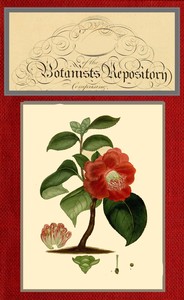
The botanist's repository for new and rare plants; vol. 09 [of 10] by Andrews
Let's clear something up first: this isn't a novel. The Botanist's Repository, Volume 9 is exactly what it says on the tin—a beautifully illustrated catalog of plants. Published between 1799 and 1828, Henry C. Andrews undertook a mammoth task: to document, paint, engrave, and describe the wave of new plants flooding into Britain from its expanding empire and global trade routes. This volume is one piece of that ten-volume puzzle.
The Story
There's no traditional plot, but there is a clear narrative drive. Each entry is a snapshot of discovery. Andrews presents a hand-colored engraving of a plant, followed by its scientific details, where it was found, and who introduced it. The "story" is the collective journey of these plants—from a remote hillside in the Cape of Good Hope or a valley in New South Wales to the hothouses of English gentry. You follow the trail of explorers, naval captains, and dedicated nurserymen whose names are forever tied to the species they brought back. The book itself is a character, a testament to one man's obsession with recording botanical wonder before it was lost or claimed by rivals.
Why You Should Read It
I love this book because it makes history tangible. It’s not about grand political events, but about the quiet, profound change happening in garden sheds and drawing rooms. You see the birth of modern botany and the sometimes messy process of naming things. Andrews' illustrations are stunning—they have a lively accuracy that photos sometimes lack. More than that, you feel the sheer excitement of the era. Every page whispers, "Look what just arrived! Can you believe this exists?" It connects you to a time when the natural world still held countless surprises, and a single plant could cause a sensation.
Final Verdict
This is a niche read, but a deeply rewarding one. It's perfect for history buffs who enjoy primary sources, gardeners with a sense of curiosity about plant origins, or anyone who appreciates beautiful scientific art. It’s not a cover-to-cover read; it’s a book to dip into, to marvel at a few plates at a time. Think of it as a museum exhibit you can hold in your hands. If you've ever looked at a common garden plant and wondered about its story, Andrews provides the thrilling first chapter.
This digital edition is based on a public domain text. You are welcome to share this with anyone.
Sarah Jackson
10 months agoAfter a thorough walkthrough of the table of contents, the inclusion of diverse viewpoints strengthens the overall narrative. Truly a masterpiece of digital educational material.
Michael Gonzalez
1 year agoA brilliant read that I finished in one sitting.
Kimberly Hernandez
9 months agoIf you're tired of surface-level information, the footnotes provide extra depth for those who want to dig deeper. Well worth the time invested in reading it.
Robert Martinez
9 months agoMy first impression was quite positive because the cross-referencing of different chapters makes it a great study tool. This is a solid reference for both beginners and experts.









Robert Lee
4 months agoI started reading this with a critical mind, the critical analysis of current industry standards is very timely. The price-to-value ratio here is simply unbeatable.