
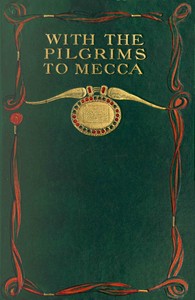
With the pilgrims to Mecca: The great pilgrimage of A.H. 1319; A.D. 1902 by Khan et al.
In 1902, British artist and writer Wilfrid Sparroy pulled off an act of incredible daring. He learned Arabic, studied Islamic customs, and, with the help of his friend Hasan Khan and others, transformed himself into a pilgrim. His goal? To infiltrate the Hajj, the annual Muslim pilgrimage to the holy city of Mecca, which was strictly off-limits to non-believers. The journey itself was grueling—weeks of travel by steamer, train, and camel across deserts, all while maintaining his disguise among thousands of devout travelers.
The Story
The book follows Sparroy's nerve-wracking adventure step-by-step. It's a day-by-day account of joining the pilgrim caravans, the sea voyage with hundreds of others packed onto a ship, and the final, awe-inspiring approach to Mecca. The "plot" is the constant, low-grade terror of being found out. He describes the rituals in vivid detail: the circling of the Kaaba, the standing at Mount Arafat, the stoning of the pillars. But running underneath it all is this electric current of fear. He's sketching secretly, taking notes in hiding, and relying on his small group of confidants to keep his secret. The climax isn't a battle, but his successful—and deeply relieved—exit from the holy territory without his cover being blown.
Why You Should Read It
This book grabbed me because it's so ethically messy and human. Sparroy isn't a villain; he's driven by a genuine, if reckless, desire to see and document. His descriptions are breathtakingly respectful and full of wonder. You feel the spiritual power of the Hajj through his eyes, even as you cringe at his deception. The real magic is in the small moments: the kindness of fellow pilgrims who suspect nothing, the shared hardships, the stunning landscapes. It makes you think hard about cultural curiosity—where does admiration end and intrusion begin? It's a portrait of a world and a religious experience that was largely a mystery to the West, painted by a man who risked everything to see it.
Final Verdict
Perfect for readers who love true adventure stories, historical travelogues, or narratives that sit in moral gray areas. If you enjoyed books like The River of Doubt or classic exploration tales, but want one with a layer of cultural tension, this is for you. It's not a dry history; it's a personal, pulse-pounding diary from the edge of discovery. Just be ready to wrestle with the author's choices as much as you marvel at his journey.
No rights are reserved for this publication. Use this text in your own projects freely.
Melissa Walker
2 years agoI started reading out of curiosity and the author's voice is distinct and makes complex topics easy to digest. One of the best books I've read this year.
Matthew Perez
2 years agoI started reading out of curiosity and the flow of the text seems very fluid. Highly recommended.


Ava Jackson
10 months agoI didn't expect much, but it creates a vivid world that you simply do not want to leave. Don't hesitate to start reading.