1

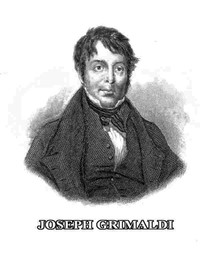
Memoirs of Joseph Grimaldi — Themes and Context
(0 User reviews)
446
Project Gutenberg
2014
Not confirmed
Grimaldi, Joseph, 1779-1837; Clowns -- Great Britain -- Biography
Readers of public-domain and historical texts
Project Gutenberg digital edition
en
Edition facts
Words
126,193
Reading time
549 min
Text sections
30
Before opening Memoirs of Joseph Grimaldi — Themes and Context, the edition data offers a quick orientation: 126,193 words, 9 hr 9 min estimated reading time, and 30 detected text sections.
The text analysis averages about 25.7 words per sentence, while the detected sections provide another way to judge how the source is divided.
Project Gutenberg metadata also associates the work with “Grimaldi, Joseph, 1779-1837,” connecting these edition facts with the source record’s subject description.
Source:
Project Gutenberg record #46709
Charles Dickens's edition of Joseph Grimaldi's memoirs, with George Cruikshank's illustrations, offers a firsthand account of the Regency clown's career, including the grueling physical and emotional toll of performing comic roles like the 'Laughing Philosopher' and the unprecedented success of 'Mother Goose.'
Editorial Edition Score
4.9/5
★★★★★
★★★★★
Calculated from edition completeness, EPUB availability, text structure and catalogue metadata. Not a user rating.
How this score is calculated
- Description quality20 pts
- Title & short description10 pts
- Source metadata20 pts
- Text length15 pts
- Chapters / structure15 pts
- EPUB file integrity20 pts
Total of 100 points, scaled to a 2.5-5.0 range. Editions with an empty description or a missing EPUB file are not scored.
Edition quality
Public-domain source text
Read the source text
The source text is kept in the dedicated reader, separate from this catalogue record and its commentary.
Charles Dickens, writing as 'Boz,' edited these memoirs of the celebrated Regency clown Joseph Grimaldi, and his introductory chapter reveals a personal curiosity about performers' lives offstage. Dickens recalls childhood questions about whether clowns were 'born Clowns, or gradually turned into Clowns as they grew up,' and whether their appetites for sausages were constant. This framing sets up a narrative that oscillates between the public spectacle of pantomime and the private suffering of its star.
The excerpts show Grimaldi's career in detail, including his physically and emotionally draining role as the 'Laughing Philosopher,' where he would sob and suffer spasms after each act, yet never fail to perform. The account of 'Mother Goose'—a pantomime that succeeded without 'gorgeous processions' or spangles—highlights how Grimaldi's talent could triumph over spectacle.
Dickens's Editorial Hand and the Clown's Voice
The catalog lists Dickens as editor, and the excerpts bear his stylistic imprint. The introductory chapter employs the first-person plural—'we first conceived a strong veneration for Clowns'—and a tone of nostalgic wonder that is characteristic of Dickens's early journalism. Yet the memoir's core is Grimaldi's own account, and the editorial task was to shape that material into a coherent narrative. The text includes detailed descriptions of theatrical rivalries, such as Drury Lane's attempt to 'crush' Grimaldi by rushing out a pantomime three days before Christmas, which backfired when the audience hissed. Such passages suggest Dickens preserved Grimaldi's insider perspective on the competitive world of Regency theatre.
The editor's presence is also felt in the selection of anecdotes that illustrate the gap between the clown's onstage hilarity and offstage anguish. The 'Laughing Philosopher' episode, where Grimaldi 'would sob and cry aloud' after the act, is presented as a 'curious instance of the power of habit'—a psychological observation that aligns with Dickens's interest in character and contradiction.
The Physical and Emotional Cost of Comedy
Grimaldi's memoirs repeatedly emphasize the physical and emotional toll of clowning. The excerpts describe how, after performing the 'Laughing Philosopher,' he would 'stagger off the stage into a small room' and suffer 'violent and agonizing spasms.' This is not a generic complaint but a specific, recurring pattern: the same effect 'was always the same' after the first act, and those around him were 'in doubt, up to the very moment of his being called, whether he would be able to go upon the stage for the second act.'
The text also notes that 'no length of habit, and no repetition of the same part, however frequent, were sufficient to banish' these weaknesses. This detail undercuts any romantic notion of the clown as a natural comic; instead, it portrays a performer who must conquer his own body and emotions nightly. The audience, meanwhile, saw only the finished performance, which 'enhanced his reputation greatly.' The memoir thus offers a behind-the-scenes view that complicates the catalog subject 'Clowns -- Great Britain -- Biography' by showing the pain behind the laughter.
The Unprecedented Success of 'Mother Goose'
One of the most striking passages in the excerpts concerns the pantomime 'Mother Goose,' which 'destined to acquire a degree of popularity quite unprecedented in the history of pantomime.' The text emphasizes that this success came despite—or perhaps because of—the production's simplicity. Unlike the typical pantomime, which relied on 'gorgeous scenery and splendid dresses,' 'Mother Goose had none of these accessories; it had neither gorgeous processions, nor gaudy banners, nor splendid scenery, nor showy dresses.' The only spangles were on the Harlequin's jacket, and even those 'would have been dispensed with' if possible.
This detail is significant because it positions Grimaldi's performance, rather than spectacle, as the draw. The rival Drury Lane pantomime, which was 'infinitely more of the character of a spectacle,' failed despite its lavishness. The excerpt thus provides evidence for Grimaldi's unique appeal: his comic skill could carry a production that lacked the usual visual extravagance. The catalog subject 'Clowns -- Great Britain -- Biography' is here enriched by a concrete example of how one clown's talent reshaped theatrical expectations.
Readers approaching these memoirs should attend to the interplay between Dickens's editorial framing and Grimaldi's raw material. The text rewards attention to the specific details of theatrical practice—the rivalries, the physical demands, the economics of pantomime—that the catalog subjects only hint at. The illustrations by George Cruikshank, though not excerpted here, were a key part of the original publication and likely complement the text's focus on the visible and invisible aspects of performance.
That book about Grimaldi stayed with me because it showed how much a performer gives, quietly, behind all the laughter. It reminded me of something I found later, about the man who printed for Henry the Eighth—how invisible craft holds up entire lives. I thought of it again reading Thomas Berthelet, Royal Printer and Bookbinder to Henry VIII., King of England — A Reader’s Guide, and how both men just carried on, shoulders to the wheel, rarely seen.
There are no reviews for this eBook.
There are no comments for this eBook.
Reader reflection
Before you leave, reflect on the book
Use these questions to collect your thoughts before moving on.
Your progress
0
/
10
2
Was reading this book enjoyable?
3
Is this a title you would suggest to others?
4
What was the reading difficulty like?
5
Did this book create an emotional response?
6
How useful were the ideas in this book?
7
How closely did the book connect with your experience?
8
Would this book work well in a reading group?
9
What is the main idea you are taking away?
10