1

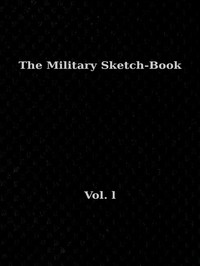
The Military Sketch-Book. Vol. 1 (of 2) Reminiscences of seventeen years in the service abroad and at home — Reading Companion
(0 User reviews)
110
Project Gutenberg
2018
Not confirmed
Military biography; Soldiers -- Conduct of life; Bushrangers
Readers of public-domain and historical texts
Project Gutenberg digital edition
en
Edition facts
Words
69,603
Reading time
303 min
Text sections
23
The catalog record for The Military Sketch-Book. Vol. 1 (of 2) Reminiscences of seventeen years in the service abroad and at home — Reading Companion provides practical reading context through 69,603 words, 5 hr 3 min estimated reading time, and 23 detected text sections.
The text analysis averages about 25.5 words per sentence, while the detected sections provide another way to judge how the source is divided.
Project Gutenberg metadata also associates the work with “Military biography,” connecting these edition facts with the source record’s subject description.
Source:
Project Gutenberg record #58449
A memoir by an anonymous officer, blending personal recollection with fictionalized sketches of military life abroad and at home, including the Walcheren Expedition and bushrangers in Van Diemen's Land.
Editorial Edition Score
4.8/5
★★★★★
★★★★★
Calculated from edition completeness, EPUB availability, text structure and catalogue metadata. Not a user rating.
How this score is calculated
- Description quality20 pts
- Title & short description10 pts
- Source metadata20 pts
- Text length15 pts
- Chapters / structure15 pts
- EPUB file integrity20 pts
Total of 100 points, scaled to a 2.5-5.0 range. Editions with an empty description or a missing EPUB file are not scored.
Edition quality
Public-domain source text
Read the source text
The source text is kept in the dedicated reader, separate from this catalogue record and its commentary.
The anonymous author of The Military Sketch-Book presents himself as an officer of the line, and his preface insists that “facts form the ground-work” of the book, though fancy has been allowed to decorate truth. The volume opens with the narrator’s elation at seeing his first military appointment in the Gazette, a moment he recalls with vivid sensory detail: the newspaper “damp from the press,” the phrase “by the King’s Royal Authority” in absolute print. This blend of personal excitement and documentary specificity sets the tone for a work that oscillates between memoir and tale.
Between Fact and Fiction
The author’s preface acknowledges that several sketches were supplied by other officers—one contributed the facts for “Mess Table Chat (No. IV),” another the details on Van Diemen’s Land bushrangers. This collaborative origin suggests the book is less a single autobiography than a composite of regimental anecdotes. The narrator’s own voice, however, remains consistent: he describes the Walcheren Expedition with precise dates (landing on 30 July), names of commanders (General Frazer, Colonel Pack), and casualty figures (eighteen killed, twenty-six wounded). Yet he also indulges in set-piece descriptions, such as the fleet appearing “like a forest” on the North Sea, and a digression on the inability of British peasants to sing in harmony. The reader must navigate between reported fact and literary embellishment, a tension the author himself acknowledges.
The Walcheren Expedition as Set Piece
The longest continuous excerpt recounts the Walcheren Expedition of 1809, a notoriously ill-fated British campaign. The narrator’s account is notable for its immediacy: the weighing of anchors, the “light breeze” from the Downs, the glees of German riflemen keeping listeners awake. He describes the assault on Campveer with a reporter’s eye for detail—the abandoned battery, the panic of the enemy, Colonel Pack cutting down a French soldier who had taken him prisoner. The French are accused of “trickery” for leaving a drawbridge down, a claim the narrator presents as common opinion. The episode ends with the town’s capitulation after a day’s cannonade, but the larger failure of the expedition is not addressed. This selective focus, typical of the sketch format, leaves the reader to infer the campaign’s broader outcome from the narrow frame of personal experience.
Catalog Subjects and Actual Content
The catalog lists “Military biography,” “Soldiers — Conduct of life,” and “Bushrangers” as subjects. The excerpts confirm the first two: the narrator’s conduct is scrutinized through his own reflections, and the preface thanks an officer who supplied facts about bushrangers in Van Diemen’s Land. However, no bushranger material appears in the provided text, and the table of contents does not list a sketch with that title in this volume. The subject “Bushrangers” may refer to a later sketch in Volume II, or to a section not excerpted. Similarly, “Soldiers — Conduct of life” is only indirectly addressed through the narrator’s moralizing asides, such as his criticism of British peasants’ lack of harmony. The excerpts thus show a work that is more episodic and anecdotal than the catalog subjects might suggest, with the bushranger content absent from the first volume’s visible contents.
Readers approaching The Military Sketch-Book should treat each sketch as a self-contained vignette, often blending personal recollection with borrowed material. The author’s claim to factual grounding invites scrutiny, but the book’s value lies in its period detail and the voice of a junior officer navigating the social and physical landscapes of early nineteenth-century military life. The absence of bushranger content in this volume may prompt curiosity about the second.
There are evenings when the anonymous officer’s weary, amused honesty reminds me of another masquerade—the conjurer who admitted his own stagecraft. Both men knew that memory is a kind of performance, rehearsed for an audience of one. That quiet kinship hums through the pages of Memoirs of Robert-Houdin, ambassador, author and conjurer — Text and Context, as if two old soldiers of illusion traded knowing glances across my desk lamp. It is a gentle comfort, nothing more.
There are no reviews for this eBook.
There are no comments for this eBook.
Reader reflection
Your personal reading reflection
Build a private reading journal entry for this title.
Your progress
0
/
10
2
Did this book hold your interest?
3
Would you recommend this book to another reader?
4
What was the reading difficulty like?
5
How useful were the ideas in this book?
6
Did the story or argument move comfortably?
7
How personally connected did you feel to the book?
8
Would you read this book again?
9
What is the main idea you are taking away?
10