1

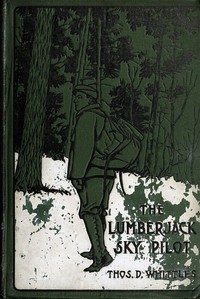
The Lumberjack Sky Pilot — Text and Context
(0 User reviews)
1212
Project Gutenberg
2013
Not confirmed
Presbyterian Church -- Clergy -- Biography; Higgins, Francis Edmund, 1865-1915; Church work with loggers -- Minnesota
Readers of public-domain and historical texts
Project Gutenberg digital edition
en
Edition facts
Words
43,098
Reading time
188 min
Text sections
6
This digital edition of The Lumberjack Sky Pilot — Text and Context is described by source-level measurements including 43,098 words, 3 hr 8 min estimated reading time, and 6 detected text sections.
The text analysis averages about 19.2 words per sentence, while the detected sections provide another way to judge how the source is divided.
Project Gutenberg metadata also associates the work with “Presbyterian Church -- Clergy -- Biography,” connecting these edition facts with the source record’s subject description.
Source:
Project Gutenberg record #42945
An editorial note examining how Thomas D. Whittles uses narrative voice and pacing in this 1908 biography of Rev. Frank E. Higgins, focusing on the contrast between serene descriptions of the Minnesota pine forests and sudden, intense episodes of blizzard survival and wolf encounters.
Editorial Edition Score
4.7/5
★★★★★
★★★★★
Calculated from edition completeness, EPUB availability, text structure and catalogue metadata. Not a user rating.
How this score is calculated
- Description quality20 pts
- Title & short description10 pts
- Source metadata20 pts
- Text length15 pts
- Chapters / structure15 pts
- EPUB file integrity20 pts
Total of 100 points, scaled to a 2.5-5.0 range. Editions with an empty description or a missing EPUB file are not scored.
Edition quality
Public-domain source text
Read the source text
The source text is kept in the dedicated reader, separate from this catalogue record and its commentary.
The Lumberjack Sky Pilot opens with a foreword that immediately establishes a dual purpose: the author insists the volume is not meant to glorify a man but to present the parish of the pines. This framing shapes the narrative voice throughout, as Whittles positions himself as a reporter of actual happenings rather than a hagiographer. The prose shifts between two distinct registers: a calm, almost pastoral tone when describing the lumber camps and their routines, and a taut, urgent style during episodes of crisis. The most striking example comes in the account of a blizzard on Red Lake, where the sentence structure itself mirrors the disorientation—long, accumulating clauses that suddenly break into short, stark statements as the snow closes in.
Voice Between Reporter and Preacher
Whittles adopts a voice that oscillates between documentary detachment and homiletic warmth. In the foreword, he writes with the measured cadence of a social observer: Imagination has little part in its pages, for the incidents are actual happenings. Yet when describing Higgins’s night in the forest, the language becomes almost scriptural: the dark depths of night hung like a spangled sheet above, but nearer than the shades which surrounded the sleeper was the One who never slumbereth. This blend of plainspoken reportage and devotional rhetoric gives the narrative a distinctive texture—neither purely journalistic nor purely sermonic. The author’s own affection for his subject is evident in small asides, such as his remark that he wrote with love because he knows the Sky Pilot, yet he consistently subordinates personal praise to the larger goal of introducing the lumberjacks themselves.
Pacing Through Peril and Anecdote
The book’s pacing is governed by a pattern of quiet exposition punctuated by sudden, vivid crises. A typical chapter moves from general descriptions of camp life into a specific, often dangerous incident. The blizzard crossing of Red Lake, for instance, builds slowly: the snow began to fall. The uninterrupted wind, as it swept down the long stretch of ice, caught the loose snow. Then the pace accelerates sharply as the shore disappears and night approaches. Whittles often follows such high-tension scenes with a deflating comic coda, as when Higgins’s dogs refuse food after a hard drive—only to learn they had gorged on stolen pork. The hotel keeper’s angry outburst (Is them blank dogs yours?) shifts the mood from anxiety to laughter, a deliberate rhythmic contrast that prevents the narrative from becoming monotonously harrowing.
Recurring Details of the Physical World
Whittles grounds his narrative in precise, sensory details that anchor the reader in the lumberjack’s environment. The cold is not abstract: it is a zero sky, a frozen dome of heaven. The dogs press closely for warmth; the fire is built around a pine stump. These recurring physical markers—snow, fire, dogs, axes, pickpoles—create a consistent sensory palette. The author also notes the sounds of the forest: the howling of timber wolves, the silence that resumes after a blaze is replenished. Such details do more than set a scene; they function as evidence of the authenticity Whittles claims in his foreword. By repeatedly returning to the tangible hardships of travel—the lost trails, the muskeg swamps, the sudden blizzards—he builds a cumulative portrait of a parish defined not by church walls but by the brutal, beautiful geography of the northern woods.
Readers will find that the book’s structure rewards attention to its shifts in tempo. The chapter headings offer a clear itinerary, but the real movement is in the alternation between panoramic views of the logging district and close-up vignettes of Higgins’s daily struggles. Pay particular notice to how Whittles handles dialogue: the hotel keeper’s colloquial outburst stands out against the more formal narrative voice, suggesting that the author deliberately preserved the rough speech of the camps as a counterpoint to his own measured prose. This tension between the polished and the raw is central to the book’s character.
Reading about Father Higgins, I kept noticing how Whittles lets the quiet forest breathe, only to snap into those sudden storms. It reminded me of another sort of hidden endurance, the quiet calm beneath earthly trials, much like in Blessed Edmund Campion — Background and Themes. Both men seem to carry a stillness that adversity cannot truly touch.
There are no reviews for this eBook.
There are no comments for this eBook.
Reader reflection
Your personal reading reflection
Build a private reading journal entry for this title.
Your progress
0
/
10
2
Did this book hold your interest?
3
Would you encourage someone else to read it?
4
Did the language feel accessible?
5
How strong was your personal connection to the text?
6
How useful were the ideas in this book?
7
Which aspect of the book did you value most?
8
Would a second reading be valuable?
9
What is the main idea you are taking away?
10