1

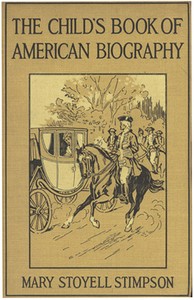
The Child's Book of American Biography — Story, Setting & Ideas
(0 User reviews)
99
Project Gutenberg
2010
Not confirmed
United States -- Biography
Readers of public-domain and historical texts
Project Gutenberg digital edition
en
Edition facts
Words
49,155
Reading time
214 min
Text sections
5
For The Child's Book of American Biography — Story, Setting & Ideas, the stored edition analysis reports 49,155 words, 3 hr 34 min estimated reading time, and 5 detected text sections.
The text analysis averages about 20.2 words per sentence, while the detected sections provide another way to judge how the source is divided.
Project Gutenberg metadata also associates the work with “United States -- Biography,” connecting these edition facts with the source record’s subject description.
Source:
Project Gutenberg record #32628
This editorial note examines how Mary Stoyell Stimpson's 1915 collection of brief biographies for children aligns with its catalog subject 'United States -- Biography,' focusing on the tension between the foreword's stated aim and the excerpts' actual content.
Editorial Edition Score
4.7/5
★★★★★
★★★★★
Calculated from edition completeness, EPUB availability, text structure and catalogue metadata. Not a user rating.
How this score is calculated
- Description quality20 pts
- Title & short description10 pts
- Source metadata20 pts
- Text length15 pts
- Chapters / structure15 pts
- EPUB file integrity20 pts
Total of 100 points, scaled to a 2.5-5.0 range. Editions with an empty description or a missing EPUB file are not scored.
Edition quality
Public-domain source text
Read the source text
The source text is kept in the dedicated reader, separate from this catalogue record and its commentary.
Mary Stoyell Stimpson's The Child's Book of American Biography (1915) opens with a foreword stating that the book aims to tell 'very short stories' about famous men and women so that children may learn 'a few facts about them.' The catalog subject 'United States -- Biography' suggests a straightforward national pantheon. Yet the excerpts reveal a more complex picture: the collection includes not only political and military figures like George Washington and Ulysses S. Grant but also artists, naturalists, and reformers such as Augustus St. Gaudens, John James Audubon, and Dorothea Lynde Dix. This note explores the relationship between the catalog subject and the actual selection of subjects, the narrative voice, and the treatment of childhood in the biographies.
Selection of Subjects: Beyond the Expected Pantheon
The catalog subject 'United States -- Biography' might lead a reader to expect a standard lineup of presidents, generals, and statesmen. Stimpson does include George Washington, Abraham Lincoln, and Daniel Webster, but the table of contents shows a broader range. Among the twenty-eight subjects are artists (John Singleton Copley, James McNeill Whistler, Augustus St. Gaudens), naturalists (Louis Agassiz, John James Audubon), inventors (Robert Fulton, Samuel F. B. Morse, Thomas Edison), and social reformers (Dorothea Lynde Dix, Jane Addams). The inclusion of figures like Luther Burbank and Edward MacDowell further diversifies the field. This selection suggests that Stimpson's definition of 'American biography' encompasses contributions to culture, science, and social welfare, not just political leadership. The excerpts confirm that the biographies treat these figures with similar narrative weight, emphasizing their childhoods and formative experiences rather than solely their adult achievements.
Narrative Voice and the Child Reader
Stimpson adopts a direct, conversational tone that addresses the child reader implicitly. In the Washington chapter, she writes that 'all kinds of interesting things, like taming wild colts, fighting Indians, hunting game, fording rivers, and commanding an army, had happened to him before that.' The list of activities mirrors a child's sense of adventure. The biography of Augustus St. Gaudens describes how 'the best fun came on the way back, when the boys sat in a long row at the front of the boat, letting their legs dangle over the edge.' Such details are not strictly necessary for a factual account but serve to engage a young audience. The foreword explicitly hopes the stories will 'make boys and girls eager to learn more,' and the narrative consistently prioritizes vivid, relatable episodes over dry chronology. This approach aligns with the book's title as a 'child's book,' yet it also shapes the portrayal of historical figures, sometimes emphasizing their youthful traits over their mature accomplishments.
Childhood as a Recurring Structural Element
Nearly every biography in the excerpts devotes significant space to the subject's early years. The Washington chapter begins with his birth in Virginia and describes his boyhood on a tobacco plantation. The St. Gaudens chapter opens with his childhood in New York, including his drawing on slates and charcoal sketches on houses. This pattern suggests that Stimpson uses childhood as a lens through which to present each figure's character and future path. The narrative often highlights a childhood incident that foreshadows later achievement: St. Gaudens 'cut cameos through the day' and learned 'how to cut wonderful heads of dogs, horses, and lions.' The emphasis on youth may reflect an assumption that children readers identify most strongly with stories of other children. However, it also means that the biographies sometimes spend more time on early life than on adult careers, which could affect the balance of information for a reader seeking a comprehensive overview of the subject's life.
Readers approaching The Child's Book of American Biography should be aware that the catalog subject 'United States -- Biography' only partially captures the book's scope. The collection offers a deliberately curated selection that includes artists, scientists, and reformers alongside political leaders. Stimpson's narrative voice consistently prioritizes engagement over exhaustive detail, and the recurring focus on childhood shapes each biography's structure. These features make the book a product of its time—a Progressive-era effort to introduce children to a broad range of American achievers through accessible, anecdotal storytelling.
I kept thinking about how that old biography collection promised one thing in its foreword and quietly delivered another, the way introductions often fib to children. It reminded me of flipping through Ten Tudor Statesmen — A Closer Reading—same gentle dissonance between what we’re told and what we find between the lines. That lingering ache of noticing the gap stays with me.
There are no reviews for this eBook.
There are no comments for this eBook.
Reader reflection
How will you remember this book?
Save your reaction, strongest insight, and memorable passage.
Your progress
0
/
10
2
Did this book hold your interest?
3
Would you pass this book on to a friend?
4
How demanding did the text feel?
5
Would you start a conversation about this book?
6
How would you describe its reading pace?
7
Could you apply anything you learned?
8
Could you see yourself revisiting this book?
9
What is the main idea you are taking away?
10