1

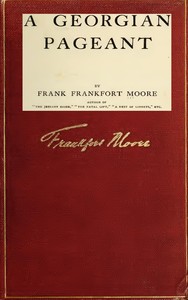
A Georgian Pageant — Key Ideas to Explore
(0 User reviews)
982
Project Gutenberg
2016
Not confirmed
Great Britain -- Biography; Great Britain -- Court and courtiers -- History -- 18th century; Great Britain -- Social life and customs -- 18th century
Readers of public-domain and historical texts
Project Gutenberg digital edition
en
Edition facts
Words
90,335
Reading time
393 min
Text sections
10
A Georgian Pageant — Key Ideas to Explore can be approached with a clearer sense of reading commitment from its source measurements: 90,335 words, 6 hr 33 min estimated reading time, and 10 detected text sections.
The text analysis averages about 26.0 words per sentence, while the detected sections provide another way to judge how the source is divided.
Project Gutenberg metadata also associates the work with “Great Britain -- Biography,” connecting these edition facts with the source record’s subject description.
Source:
Project Gutenberg record #51964
Frank Frankfort Moore challenges conventional portraits of Johnson, Goldsmith, and other Georgian figures through close reading of primary sources, arguing that received anecdotes often distort character and motive.
Editorial Edition Score
4.9/5
★★★★★
★★★★★
Calculated from edition completeness, EPUB availability, text structure and catalogue metadata. Not a user rating.
How this score is calculated
- Description quality20 pts
- Title & short description10 pts
- Source metadata20 pts
- Text length15 pts
- Chapters / structure15 pts
- EPUB file integrity20 pts
Total of 100 points, scaled to a 2.5-5.0 range. Editions with an empty description or a missing EPUB file are not scored.
Edition quality
Public-domain source text
Read the source text
The source text is kept in the dedicated reader, separate from this catalogue record and its commentary.
Frank Frankfort Moore opens A Georgian Pageant with a pointed apology: the papers that follow grew out of a conversation with the late Professor J. Churton Collins, in which Moore argued that prevailing views of Oliver Goldsmith, Henry Thrale, James Boswell, and Samuel Johnson were “grossly erroneous.” He charges earlier biographers with treading “in the footsteps of the man preceding him” like “Indians on the warpath,” a simile that signals his combative stance. The book is not a neutral survey but a deliberate corrective, aiming to restore nuance to figures flattened by repetition.
A Diction of Disagreement
Moore’s vocabulary repeatedly marks his revisionist intent. He describes received opinions as “conventional,” “grossly erroneous,” and the product of “conservators of the conventional.” His own method he calls “unbiassed,” a word that implies previous accounts were biased. In the chapter on Goldsmith, he strings together the epithets applied to the writer—“contemptible wretch,” “silly man,” “envious man,” “empty-headed man,” “stuttering fool,” “idiot (of the inspired variety),” “awkward lout,” “shallow pedant”—before demolishing each with counter-evidence. The accumulation itself is a rhetorical device: by listing the insults, Moore makes their absurdity palpable. He then juxtaposes these with facts: Goldsmith was chosen as traveling companion by “two of the most beautiful and charming young ladies,” exchanged nicknames with them, and was visited in his garret by Dr. Percy. The contrast is stark and deliberate.
The Voice of the Narrator
Moore’s own voice is conversational and occasionally sardonic. He uses direct address (“What is a simple reader to think?”) and rhetorical questions that implicate the audience in his skepticism. His tone shifts from scholarly to colloquial, as when he notes that if the poet Beattie “could only have been laid on to Mark Twain we should have the most comic biography ever written.” This blend of erudition and wit mirrors the eighteenth-century essayists he discusses. He also employs irony: after listing Goldsmith’s supposed failings, he remarks, “A singular position for an Irish lout to find himself in!” The italics and exclamation mark underscore the gap between stereotype and reality. Moore’s prose thus performs the very re-evaluation it argues for, refusing the dry neutrality of conventional history.
Structure as Argument
The book’s organization reinforces its polemical purpose. Each chapter is titled as a dramatic or narrative form—“A Comedy in St. Martin’s Street,” “A Tragedy in the Haymarket,” “The Best Comedy of the Century”—suggesting that history itself is a series of scenes to be reinterpreted. The opening “Writer’s Apology” functions as a manifesto, naming the specific errors Moore intends to correct. Subsequent chapters then provide the evidence. This structure mirrors the legal or forensic mode: a charge is laid out, then proven. Within chapters, Moore often presents the conventional view first, then systematically undermines it with primary sources. For instance, he notes that Boswell was excluded from Johnson’s Club for ten years, while Goldsmith was an original member—a fact that undercuts Boswell’s portrait of Goldsmith as a fool.
Recurring Details and Their Weight
Moore anchors his arguments in small, telling details. He observes that Johnson, “who certainly never was accused of harbouring unworthy aspirations to be accounted a beau,” would dress in his best clothes before visiting Goldsmith, “in order, as he explained, that the latter might have no excuse for his slovenliness.” This anecdote, drawn from contemporary accounts, does double duty: it shows Goldsmith’s reputation for slovenliness, but also Johnson’s peculiar solicitude. Moore also notes that Goldsmith was appointed Professor of History to the Royal Academy without protest, a fact that contradicts the charge of shallow learning. These details are not mere ornaments; they are the evidence on which Moore’s revision rests. By foregrounding such specifics, he invites readers to weigh them against the sweeping dismissals of earlier biographers.
Moore’s method—close attention to diction, structure, and contradictory detail—offers a model for reading eighteenth-century lives against the grain. Readers will find that the book rewards those who pause over its quotations and weigh its evidence. The pageant, as Moore presents it, is less a procession of settled reputations than a series of contested portraits, each requiring fresh scrutiny.
Frankfort Moore’s insistence on seeing past the anecdotes reminded me of my grandmother’s quiet correction of family myths. She’d read aloud from Mary Russell Mitford and her surroundings — Reading Companion, and I felt that same gentle unsettling of a well-loved portrait. Both books ask me to sit with the original letters, not the legends we’ve layered on top.
There are no reviews for this eBook.
There are no comments for this eBook.
Reader reflection
Your personal reading reflection
Build a private reading journal entry for this title.
Your progress
0
/
10
2
Did this book hold your interest?
3
How likely are you to recommend this book?
4
How demanding did the text feel?
5
Did the book meet your expectations?
6
What was its emotional impact?
7
Which part made the strongest impression?
8
What did you think about the pace?
9
What did this book teach you most?
10