1

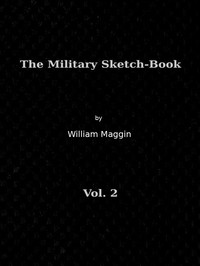
The Military Sketch-Book, Vol. 2 (of 2) Reminiscences of seventeen years in the service abroad and at home — Text and Context
(0 User reviews)
97
Project Gutenberg
2018
Not confirmed
Military biography; Soldiers -- Conduct of life; Bushrangers
Readers of public-domain and historical texts
Project Gutenberg digital edition
en
Edition facts
Words
70,607
Reading time
307 min
Text sections
7
Before opening The Military Sketch-Book, Vol. 2 (of 2) Reminiscences of seventeen years in the service abroad and at home — Text and Context, the edition data offers a quick orientation: 70,607 words, 5 hr 7 min estimated reading time, and 7 detected text sections.
The text analysis averages about 27.3 words per sentence, while the detected sections provide another way to judge how the source is divided.
Project Gutenberg metadata also associates the work with “Military biography,” connecting these edition facts with the source record’s subject description.
Source:
Project Gutenberg record #57327
This volume of military reminiscences mixes guard-room storytelling with firsthand accounts of the Peninsular War, including a harrowing description of Spanish guerrillas murdering French prisoners. The catalog subject 'Bushrangers' appears only in the final sketch, while the bulk of the text focuses on barracks life and campaign recollections.
Editorial Edition Score
4.7/5
★★★★★
★★★★★
Calculated from edition completeness, EPUB availability, text structure and catalogue metadata. Not a user rating.
How this score is calculated
- Description quality20 pts
- Title & short description10 pts
- Source metadata20 pts
- Text length15 pts
- Chapters / structure15 pts
- EPUB file integrity20 pts
Total of 100 points, scaled to a 2.5-5.0 range. Editions with an empty description or a missing EPUB file are not scored.
Edition quality
Public-domain source text
Read the source text
The source text is kept in the dedicated reader, separate from this catalogue record and its commentary.
The second volume of The Military Sketch-Book opens not with a campaign but with a guard-room scene: private soldiers gathered around a fire, coaxing a song from Jack Andrews. The narrative voice is that of an anonymous officer, yet the texture of the prose is thick with enlisted men’s dialect, nicknames, and the rhythms of barracks storytelling. The catalog lists 'Bushrangers' as a subject, but the excerpts show that the volume’s center of gravity lies elsewhere—in the Peninsular War and in the social world of soldiers off duty.
Guard-Room Voices and Vernacular
The opening sketch, 'Nights in the Guard-House, No. IV,' establishes a distinctive narrative mode: the frame is a convivial gathering of soldiers, and the story is delivered in the voices of the men themselves. Private Mulligan calls out to 'Jack Andrews' in a thick Irish dialect, and the narrator notes that Andrews 'was a good singer, and a still better story-teller.' The guard-room is presented as a space where rank relaxes—the sergeant bestirs himself from his snooze to listen—and where memory is communal property. The men claim that if Andrews and Corporal Callaghan were present, they 'would not refuse two extra guards in the week.' This emphasis on oral performance and shared recollection suggests that the book’s structure is closer to a collection of tales than a chronological memoir.
Witness to Atrocity in the Peninsula
The most striking passage in the excerpts is a sustained account of Spanish guerrillas murdering French prisoners. The narrator describes a morning when the cottage where he slept was 'filled with Spanish soldiers' each carrying knapsacks taken from the French, and notes that 'for every knapsack which we counted, there was a murdered prisoner.' The tone is direct and horrified: 'We were horror-struck when we beheld them.' The Spanish officers excuse the killings by saying the men had not been paid for two years, but the narrator rejects this reasoning, observing that the prisoners were 'as much the victims of it as the Spaniards themselves.' This episode is embedded in a longer sketch titled 'Recollections of the Last Campaign in the Peninsula,' and it shows the author’s willingness to report uncomfortable truths about allies.
The Catalog Subject That Barely Appears
The Project Gutenberg catalog lists 'Bushrangers' as a subject, yet the excerpts contain only a single mention: the final sketch is titled 'Nights in the Guard-House, No. VI.:—The Bushrangers.' No text from that sketch is included in the excerpts, so the reader cannot assess how the term is used—whether it refers to Australian outlaws, as the word commonly does, or to some other kind of irregular fighter. The rest of the volume’s contents, as listed in the table of contents, are dominated by guard-house scenes, mess-table chat, and Peninsular War recollections. The catalog subject therefore appears to be based on that one sketch, which may be a minor part of the book. Readers should not expect a sustained treatment of bushranging.
The volume’s subtitle promises 'Reminiscences of seventeen years in the service abroad and at home,' but the excerpts suggest that 'abroad'—specifically the Peninsular War—receives far more attention than 'at home.' Readers interested in the social history of the British army will find the guard-room scenes valuable for their depiction of enlisted men’s culture and dialect. Those seeking a continuous narrative should be prepared for a series of loosely connected sketches and anecdotes.
I often find myself thinking of that old Military Sketch-Book’s quiet passages—the weariness of a soldier’s march, the weight of a remembered face. In Looking Back — Text and Context, there's the same gentle ache, that pull of years folding over you. Different wars, perhaps, but the same long shadow of recollection. It felt less like reading the second and more like listening to an old friend pause, mid-sentence, and smile at something only they could see.
There are no reviews for this eBook.
There are no comments for this eBook.
Reader reflection
How did this book work for you?
Your answers remain private and are stored only in this browser.
Your progress
0
/
10
2
How much did you enjoy the reading experience?
3
Would you recommend this book to another reader?
4
Did the language feel accessible?
5
How did the reading compare with what you expected?
6
Would you start a conversation about this book?
7
Did the story or argument move comfortably?
8
How strongly did the book affect you emotionally?
9
In one sentence, what did you learn?
10