1

A libell of Spanish lies — A Reader’s Guide
(0 User reviews)
364
Project Gutenberg
2023
Not confirmed
Drake, Francis, approximately 1540-1596 -- Death and burial; Delgadillo de Avellaneda, Bernaldino, 1544-1629; Isle of Pines, Battle of the, Cuba, 1596 -- Personal narratives
Readers of public-domain and historical texts
Project Gutenberg digital edition
en
Edition facts
Words
10,260
Reading time
45 min
Text sections
10
Before opening A libell of Spanish lies — A Reader’s Guide, the edition data offers a quick orientation: 10,260 words, 45 min estimated reading time, and 10 detected text sections.
The text analysis averages about 38.9 words per sentence, while the detected sections provide another way to judge how the source is divided.
Project Gutenberg metadata also associates the work with “Drake, Francis, approximately 1540-1596 -- Death and burial,” connecting these edition facts with the source record’s subject description.
Source:
Project Gutenberg record #71057
Captain Henry Savile's 1596 pamphlet refutes Spanish claims about the Battle of the Isle of Pines and Drake's death, exposing deliberate misnaming and exaggeration through sarcastic, forensic rebuttal.
Editorial Edition Score
4.7/5
★★★★★
★★★★★
Calculated from edition completeness, EPUB availability, text structure and catalogue metadata. Not a user rating.
How this score is calculated
- Description quality20 pts
- Title & short description10 pts
- Source metadata20 pts
- Text length15 pts
- Chapters / structure15 pts
- EPUB file integrity20 pts
Total of 100 points, scaled to a 2.5-5.0 range. Editions with an empty description or a missing EPUB file are not scored.
Edition quality
Public-domain source text
Read the source text
The source text is kept in the dedicated reader, separate from this catalogue record and its commentary.
Captain Henry Savile opens his 1596 pamphlet not with a narrative of battle but with a philological quarrel: the Spanish general Don Bernaldino Delgadillo de Avellaneda has misnamed the English commander, calling him 'Quebraran' instead of Baskerville. Savile seizes on this error as proof of a 'forge & storehouse of lyes,' and the entire text becomes a point-by-point dismantling of a printed Spanish letter found at the sack of Cadiz. The pamphlet is less a battle report than a courtroom cross-examination, where word choice and numerical consistency are the weapons.
The Weapon of a Wrong Name
Savile devotes his opening pages to the name 'Quebraran,' which he calls 'straunge, and vnknowne to any in the English Nauie.' He argues that no Englishman, when asked his general's name, would produce a word with 'no affinitie at all' to Baskerville. The error is not merely comic but strategic: it allows Savile to question the credibility of every subsequent Spanish claim. He invokes the scholastic proverb 'Barnardus non videt omnia' to suggest that Bernaldino, like his namesake, is blind to the truth. The name itself becomes a synecdoche for the entire Spanish account—fabricated, self-serving, and easily refuted by anyone who was actually present.
Numbers Under Scrutiny
Savile treats Spanish figures as arithmetic puzzles. Don Bernaldino claims to have taken 140 men and 15 noble captains; Savile retorts that 'the fifteene noble Captaines according the generals lying occupation, will proue but three.' He does not simply deny the numbers—he predicts that when the Spanish produce their prisoners, the count will shrink. The same skepticism applies to the 'good Shippe well manned' supposedly abandoned by the English. Savile explains that the ship had been separated by weather thirteen days before the fight and 'neuer to anye mans knowledge came more in sight of the English fleete.' The Spanish, he implies, have claimed a distressed vessel as a prize of war, inflating a chance encounter into a victory.
The Rhetoric of Stretched Leather
Savile's prose is deliberately earthy and physical. He describes the Spanish general as a man who 'doth stretch the Leather with his teeth that it is ready to breake' to make small matters seem great. The image belongs to a craftsman's world—shoemaking—and it grounds the abstract charge of exaggeration in tangible, almost violent effort. Elsewhere, he calls the Spanish account 'a little shoe to serue a great foote.' This consistent metaphor of ill-fitting, forced fabrication runs through the pamphlet, giving it a unifying verbal texture. Savile does not merely accuse; he makes the act of lying visible as a kind of manual labor, clumsy and unsustainable.
The Witness of the Page
Savile repeatedly appeals to the physical evidence of the printed letter itself. He notes that the Spanish general 'hath by his Printed letters' made his claims, and that the printing 'doth shame the General' when the text is examined. The pamphlet is framed as a direct response to a document—a material object found at Cadiz—and Savile treats the letter as a piece of evidence that can be held up and dissected. He also invokes Sir Thomas Baskerville's personal 'Approbation,' in which the general offers to maintain the truth of Savile's account 'personally in Armes against Don Bernaldino.' This threat of physical combat underscores that the dispute is not merely literary but a matter of honor and national reputation.
Readers should approach A libell of Spanish lies as a specimen of Elizabethan polemic, where truth is established through ridicule, arithmetic, and the careful examination of a single printed page. Savile's method—forensic, sarcastic, and relentlessly specific—offers a model for reading any contested historical account. The pamphlet does not provide a full battle narrative; it provides a lesson in how to spot a lie by its language.
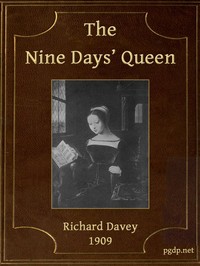
What struck me about Savile’s pamphlet was how quietly he untangles a lie, piece by piece, until the truth feels almost lonely. That same ache followed me through The Nine Days' Queen, Lady Jane Grey, and Her Times — A Closer Reading, where a young life is rewritten by others’ ambitions. I still think about how both books hold their subjects tenderly, letting history’s noise fade to a whisper.
There are no reviews for this eBook.
There are no comments for this eBook.
Reader reflection
What did you think of this book?
Answer a few questions and save a private reflection on this device.
Your progress
0
/
10
2
How much did you enjoy the reading experience?
3
Would you recommend this book to another reader?
4
How much effort did this book require?
5
Did the book give you something worth debating?
6
Do you expect to return to this book?
7
What did you think about the pace?
8
How would you rate its originality?
9
In one sentence, what did you learn?
10