1


Memoir of the Life and Services of Vice-Admiral Sir Jahleel Brenton, Baronet, K.C.B. — A Reader’s Guide
(0 User reviews)
1180
Project Gutenberg
2019
Not confirmed
Admirals -- Great Britain -- Biography; Great Britain -- History, Naval -- 19th century; Brenton, Jahleel, Sir, 1770-1844
Readers of public-domain and historical texts
Project Gutenberg digital edition
en
Edition facts
Words
190,941
Reading time
831 min
Text sections
28
The catalog record for Memoir of the Life and Services of Vice-Admiral Sir Jahleel Brenton, Baronet, K.C.B. — A Reader’s Guide provides practical reading context through 190,941 words, 13 hr 51 min estimated reading time, and 28 detected text sections.
The text analysis averages about 31.4 words per sentence, while the detected sections provide another way to judge how the source is divided.
Project Gutenberg metadata also associates the work with “Admirals -- Great Britain -- Biography,” connecting these edition facts with the source record’s subject description.
Source:
Project Gutenberg record #58746
An 1846 memoir of Vice-Admiral Sir Jahleel Brenton, edited by Henry Raikes, drawing on original memorials to detail Brenton's naval service in the Mediterranean, including his command of HMS Spartan, interactions with Lord Collingwood and Lord Cochrane, and the editor's aim to present Brenton as a model of character for younger officers.
Editorial Edition Score
4.9/5
★★★★★
★★★★★
Calculated from edition completeness, EPUB availability, text structure and catalogue metadata. Not a user rating.
How this score is calculated
- Description quality20 pts
- Title & short description10 pts
- Source metadata20 pts
- Text length15 pts
- Chapters / structure15 pts
- EPUB file integrity20 pts
Total of 100 points, scaled to a 2.5-5.0 range. Editions with an empty description or a missing EPUB file are not scored.
Edition quality
Public-domain source text
Read the source text
The source text is kept in the dedicated reader, separate from this catalogue record and its commentary.
The editor, Henry Raikes, states in his dedication that he undertook this memoir 'chiefly from a sense of public duty' and to show how 'qualities of a very different kind might be combined in one man.' Rather than a conventional biography, Raikes aims to reveal Brenton's character through his behavior 'under the several trials of his eventful life.' The narrative retains much of the language of the original memorial that forms its basis, giving the work a documentary texture.
A Portrait Built from Original Memorials
Raikes explains that he has 'retained as much as possible of the language of the original memorial, which forms the basis of the narrative.' This editorial choice means the memoir often reads as a compilation of firsthand accounts and official reports rather than a polished retrospective. The excerpts show this directly: passages describe Captain Brenton's movements in the Mediterranean with precise dates, winds, and ship positions—'a fresh breeze then springing up from the S.W., the Spartan stretched over for Minorca.' The voice is that of a naval log or after-action report, not a biographer's summary.
This method gives the reader access to the raw materials of Brenton's career, but it also means the narrative can feel episodic. Raikes does not impose a strong interpretive framework; instead, he lets the sequence of events—chases, battles, intelligence-gathering—speak for itself. The result is a work that prioritizes documentary evidence over narrative flow.
Brenton's Mediterranean Command Under Scrutiny
The excerpts focus heavily on Brenton's command of the frigate Spartan in the Mediterranean during the Napoleonic Wars. The text records his interactions with senior officers like Lord Collingwood and Admiral Purvis, and his role in conveying intelligence about French squadron movements. One striking detail is Collingwood's reaction upon hearing of Brenton's safety: 'That poor Brenton was the child of misfortune.' This remark, preserved in the narrative, suggests that Brenton was perceived as unlucky or accident-prone by his superiors, even as they praised his conduct.
The memoir also includes a joint operation with Lord Cochrane, captain of the Imperieuse, attacking merchant vessels and destroying signal posts near Cape Mejean. These episodes show Brenton engaged in the routine but hazardous work of frigate captains: chasing convoys, exchanging fire with shore batteries, and cooperating with other ships. The text does not inflate these actions into heroic set-pieces; it reports them with the same matter-of-fact tone as the weather conditions.
The Editor's Moral Purpose and Its Limits
Raikes explicitly frames the memoir as a moral exemplar for younger naval officers. In the dedication, he writes that his desire was 'to do good to others, rather than to do justice to my subject,' and that he hoped to show how Brenton could be 'a model of what man ought to be in every relation of life.' This didactic aim shapes the selection and presentation of material, but the excerpts themselves do not dwell on Brenton's private virtues or domestic life. The narrative remains almost entirely focused on professional actions and official communications.
Readers should note that the memoir's moral framework is stated in the front matter but not consistently demonstrated in the surviving text. The excerpts give little sense of Brenton's personality beyond his competence and the occasional judgment of his peers. The work's value may lie more in its detailed record of frigate operations than in its portrait of character, despite the editor's stated intentions.
This memoir offers a close, document-based account of a Royal Navy captain's service in the Mediterranean during a period of intense naval warfare. Readers interested in the operational details of frigate command—the interplay of wind, intelligence, and senior officers' expectations—will find the narrative rewarding. The editor's moral framing is present but does not overwhelm the factual record, leaving the reader to judge Brenton's character from his actions as reported.
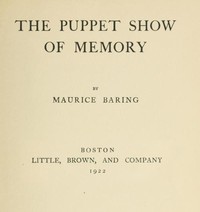
Rain fell against the window that afternoon while I lingered over Brenton’s stoic endurance, his quiet faith through naval setbacks. That steady, unshowy integrity stayed with me long after closing the memoir. Later, browsing idle shelves, my hand drifted to The Puppet Show of Memory — Key Ideas to Explore, which unpacks how character reveals itself in recollection. The two felt oddly conversational, both trusting understatement over spectacle.
There are no reviews for this eBook.
There are no comments for this eBook.
Reader reflection
Your personal reading reflection
Build a private reading journal entry for this title.
Your progress
0
/
10
2
Did this book hold your interest?
3
Would you recommend this book to another reader?
4
How demanding did the text feel?
5
How did the reading compare with what you expected?
6
Did the book give you something worth debating?
7
Did anything about the book feel genuinely new?
8
Would a second reading be valuable?
9
Which lesson or insight stayed with you?
10