1

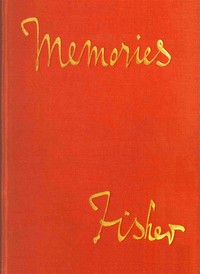
Memories, by Admiral of the Fleet, Lord Fisher — Reading Companion
(0 User reviews)
351
Project Gutenberg
2022
Not confirmed
Admirals -- Great Britain -- Biography; Great Britain. Royal Navy; Fisher, John Arbuthnot Fisher, Baron, 1841-1920
Readers of public-domain and historical texts
Project Gutenberg digital edition
en
Edition facts
Words
82,460
Reading time
359 min
Text sections
28
Memories, by Admiral of the Fleet, Lord Fisher — Reading Companion can be approached with a clearer sense of reading commitment from its source measurements: 82,460 words, 5 hr 59 min estimated reading time, and 28 detected text sections.
The text analysis averages about 19.4 words per sentence, while the detected sections provide another way to judge how the source is divided.
Project Gutenberg metadata also associates the work with “Admirals -- Great Britain -- Biography,” connecting these edition facts with the source record’s subject description.
Source:
Project Gutenberg record #68034
Lord Fisher's memoirs, dictated in 1919, defy chronology by beginning with his later years and ending with his birth. The book's structure mirrors his impulsive, spoken style, with digressions on prayer, Satan, and naval life, all tied together by his forceful personality.
Editorial Edition Score
4.9/5
★★★★★
★★★★★
Calculated from edition completeness, EPUB availability, text structure and catalogue metadata. Not a user rating.
How this score is calculated
- Description quality20 pts
- Title & short description10 pts
- Source metadata20 pts
- Text length15 pts
- Chapters / structure15 pts
- EPUB file integrity20 pts
Total of 100 points, scaled to a 2.5-5.0 range. Editions with an empty description or a missing EPUB file are not scored.
Edition quality
Public-domain source text
Read the source text
The source text is kept in the dedicated reader, separate from this catalogue record and its commentary.
Lord Fisher opens his memoirs with a declaration that there is “no plan nor sequence,” and he keeps that promise. The book begins not with his birth but with his later reflections, moving backward through his life. The text is presented as nearly verbatim dictation, preserving what an editor calls the “aroma” of Fisher’s spoken word. Readers encounter abrupt shifts—from a meditation on Satan’s appearance before the Almighty to a leaky wooden battleship squirting water inboard. These jumps are not errors but the book’s deliberate method: Fisher values the “first impulse of the heart” over polished prose.
A Backward Life
Fisher announces that he will “begin my life backwards and leave my birth and being weaned till the end.” This inversion is the book’s governing structure. Instead of a steady chronological march, the narrative loops and backtracks, mirroring how memory actually works. The editor notes that Fisher cared “little for the past and much for the future,” which explains why the early chapters dwell on his mature career and opinions. Only late in the book does the reader encounter his childhood. This arrangement forces attention on the man’s ideas and actions rather than on a simple life story. The effect is disorienting but intentional: Fisher wants the reader to experience his mind in action, not a tidy biography.
The Spoken Word Preserved
Fisher distrusted the printed word. The editor explains that the book is a compromise between Fisher’s wish for no book at all and the public’s desire for an autobiography. The text was dictated during September 1919 and left largely unamended. Fisher’s voice comes through in short, punchy sentences and sudden exclamations. He describes a nickname for his youngest daughter—“The last straw”—and a rule posted over the mantelpiece that it was “défendu” to kiss her. Such details are not polished anecdotes but raw recollections. The editor has added some chapters from Fisher’s private printed papers and letters to Lord Esher, but the core remains Fisher’s unvarnished talk. This gives the book the feel of a long, energetic monologue.
Recurring Images: Leaks, Pumps, and Fountains
One of the most vivid recurring images in the excerpts is that of water leaking into a ship. Fisher describes the old battleship Ocean, whose timbers opened and shut with the sea, “squirted the water inboard” and kept “many fountains playing in the bottom of the ship.” The crew had to man the chain pumps constantly. This image appears not as a metaphor but as a concrete memory, yet it recurs in different contexts—once when a bishop’s sermon on wandering thoughts is interrupted by the sight of a pump handle overhead. The leaky ship becomes a touchstone for Fisher’s style: immediate, physical, and slightly chaotic. It also hints at the constant labor required to keep a vessel—or a life—afloat.
Digressions on Prayer and Providence
Fisher repeatedly returns to the subject of prayer, often through anecdotes. He recalls a bishop in Zanzibar who gave an extempore sermon on wandering thoughts during prayer, using a pump handle as his text. He also quotes a Norfolk parson who told his congregation that praying for rain was useless while the wind was east. Fisher’s own view is pragmatic: prayer must be “absolutely unselfish,” and he cites Dr. Chalmers’s preferred collect. These digressions are not theological treatises but conversational asides. They reveal a man who thinks through stories, not abstractions. The same impulse leads him to remark on Satan’s appearance in the Book of Job, calling it “the most subtle innuendo I ever came across.” The book’s structure allows such tangents to stand without apology.
Readers should expect a memoir that resists easy navigation. Fisher’s backward chronology and digressive style reward those who accept the book on its own terms—as a dictated record of a forceful mind. The index and chapter headings offer some guidance, but the real pleasure lies in following Fisher’s leaps from a leaky ship to a sleeping child to a theological insight. Approach it as a conversation, not a reference work.
It’s funny how some books feel less like reading and more like sitting with someone who talks in spirals. Lord Fisher’s Memories did that to me—starting at the end, wandering through prayer and spite, held together by sheer personality. I found the same lingering warmth in the companion notes for Memories and Adventures — Reading Notes, almost like an old friend’s voice caught mid-thought.
There are no reviews for this eBook.
There are no comments for this eBook.
Reader reflection
Your personal reading reflection
Build a private reading journal entry for this title.
Your progress
0
/
10
2
Did this book hold your interest?
3
Would you recommend this book to another reader?
4
Did the language feel accessible?
5
Was the book what you thought it would be?
6
What did you think about the pace?
7
Which part made the strongest impression?
8
How distinctive were its ideas or approach?
9
In one sentence, what did you learn?
10