1

Rajah Brooke — Key Ideas to Explore
(0 User reviews)
800
Project Gutenberg
2023
Not confirmed
James, Rajah of Sarawak, 1803-1868; Sarawak (Malaysia) -- History; Sarawak (Malaysia) -- Kings and rulers -- Biography
Readers of public-domain and historical texts
Project Gutenberg digital edition
en
Edition facts
Words
80,174
Reading time
349 min
Text sections
21
This digital edition of Rajah Brooke — Key Ideas to Explore is described by source-level measurements including 80,174 words, 5 hr 49 min estimated reading time, and 21 detected text sections.
The text analysis averages about 28.0 words per sentence, while the detected sections provide another way to judge how the source is divided.
Project Gutenberg metadata also associates the work with “James, Rajah of Sarawak, 1803-1868,” connecting these edition facts with the source record’s subject description.
Source:
Project Gutenberg record #70688
Spenser St. John's biography of Sir James Brooke examines the language, narrative voice, and shifts in pace as it chronicles Brooke's rule in Sarawak. The preface sets a measured, diplomatic tone, while later passages on the Chinese rebellion adopt a vivid, almost novelistic style, with precise details of violence and tense negotiations.
Editorial Edition Score
4.9/5
★★★★★
★★★★★
Calculated from edition completeness, EPUB availability, text structure and catalogue metadata. Not a user rating.
How this score is calculated
- Description quality20 pts
- Title & short description10 pts
- Source metadata20 pts
- Text length15 pts
- Chapters / structure15 pts
- EPUB file integrity20 pts
Total of 100 points, scaled to a 2.5-5.0 range. Editions with an empty description or a missing EPUB file are not scored.
Edition quality
Public-domain source text
Read the source text
The source text is kept in the dedicated reader, separate from this catalogue record and its commentary.
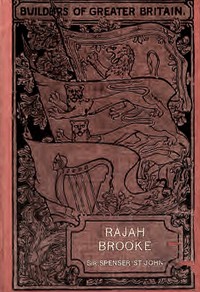
The preface to Spenser St. John's biography of Sir James Brooke establishes a deliberate, analytical voice. St. John describes Brooke as a 'Builder of Greater Britain' and outlines his policy of securing treaties to protect Eastern states—a measured, diplomatic opening. Yet the narrative soon shifts dramatically. In the account of the Chinese rebellion in Kuching, the prose becomes immediate and sensory: 'the six hundred rebels, joined by the Chinese vagabonds of the town, half-stupefied by opium, were wandering about in every direction, discharging their muskets loaded with ball cartridges.' This contrast between the preface's reasoned argument and the rebellion's chaotic, violent detail marks a key change in pace and voice.
From Policy to Panic: A Shift in Narrative Pace
The biography's opening sections move at a stately, expository pace. St. John explains Brooke's diplomatic vision—'to make treaties with all the independent princes of the Eastern Archipelago'—in long, carefully constructed sentences. The language is that of a statesman reflecting on imperial strategy. But when the narrative reaches the Chinese uprising, the tempo accelerates. Sentences shorten: 'When morning broke in Kuching, there was a scene of the wildest confusion.' The prose becomes fragmented, mimicking the disorder. St. John shifts from a historian's overview to an almost eyewitness account, describing 'the head of Mr Nicoletts carried about on a pole' and the 'blankness' that came over the Chinese chiefs' countenances at the mention of Charles Johnson's name. This abrupt change in pace—from measured policy to urgent, visceral detail—reveals St. John's ability to modulate tone to suit the drama of events.
Voice of the Biographer: St. John's Dual Persona
St. John writes as both a former subordinate and a chronicler. In the preface, he adopts the voice of a loyal lieutenant, calling Brooke 'my first and only chief.' This personal note lends authority but also a certain deference. Yet in the rebellion scenes, the voice becomes more detached and observational, almost like a novelist. He notes that the Chinese chiefs 'appeared also to have forgotten that there were Sadong, under Mr Fox, and Rejang, under Mr Steel'—a detail that suggests St. John had access to inside knowledge or later reports. The language is precise: 'Poor Mrs Crookshank had lain on the ground all night, desperately wounded, and with extraordinary coolness and courage had shammed death.' This blend of personal loyalty and objective reportage creates a distinctive narrative voice—one that is both intimate and authoritative, though it occasionally leaves the reader wondering which perspective dominates.
Recurring Details: The Weight of Names and Titles
Throughout the excerpts, St. John repeatedly uses full titles and names—'the Bishop of Sarawak,' 'Mr Helms, agent for the Borneo Company,' 'the Datu Bandhar'—to anchor the narrative in a specific social hierarchy. This cataloging of roles reflects the colonial structure of Sarawak and gives the prose a documentary feel. In the rebellion account, the Chinese chief 'sat in the Rajah's chair' and issued orders, a symbolic detail that underscores the inversion of power. St. John also notes the 'Gold Company' and 'Kungsi,' terms that root the conflict in the Chinese community's organizational structure. These recurring references to titles, companies, and ethnic groups serve as a kind of shorthand, reminding the reader that Brooke's rule was a complex web of alliances and rivalries. The precision of these details—'the Datu Imaum, his more energetic brother'—suggests St. John's familiarity with the players, but also his effort to present a clear, almost bureaucratic account of events.
Readers should pay attention to how St. John handles the transition from the preface's policy discussions to the rebellion's dramatic narrative. The shifts in pace and voice are not merely stylistic; they reflect the biographer's dual role as participant and historian. The recurring use of specific names and titles provides a framework for understanding the complex social order of Brooke's Sarawak, but it also invites questions about whose perspectives are foregrounded and whose are omitted.
Re-reading St. John's account of Brooke's calm diplomacy amid Sarawak's chaos, I found myself thinking of A Biography of Edmund Spenser — Themes and Context. Both men navigated turbulent worlds with measured prose, their public composure masking private storms. There's something tender in watching a biographer trace that quiet steadiness, as if holding a lantern to a distant, resolute face. I lingered on that thought longer than expected.
There are no reviews for this eBook.
There are no comments for this eBook.
Reader reflection
How did this book work for you?
Your answers remain private and are stored only in this browser.
Your progress
0
/
10
2
What was your overall reaction to the book?
3
Is this a title you would suggest to others?
4
Did the language feel accessible?
5
What did you think about the pace?
6
What did you appreciate most?
7
Did the book offer a fresh perspective?
8
Would this book work well in a reading group?
9
What changed or sharpened your thinking?
10