1

Richard the Lion Heart — Reading Notes
(0 User reviews)
1352
Project Gutenberg
2023
Not confirmed
Richard I, King of England, 1157-1199; Great Britain -- Kings and rulers -- Biography; Great Britain -- History -- Richard I, 1189-1199
Readers of public-domain and historical texts
Project Gutenberg digital edition
en
Edition facts
Words
137,974
Reading time
600 min
Text sections
34
Before opening Richard the Lion Heart — Reading Notes, the edition data offers a quick orientation: 137,974 words, 10 hr estimated reading time, and 34 detected text sections.
The text analysis averages about 24.7 words per sentence, while the detected sections provide another way to judge how the source is divided.
Project Gutenberg metadata also associates the work with “Richard I, King of England, 1157-1199,” connecting these edition facts with the source record’s subject description.
Source:
Project Gutenberg record #71283
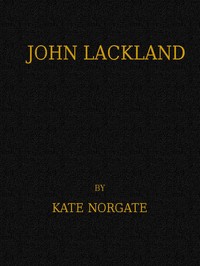
Kate Norgate's 1924 biography of Richard I focuses on his personal character and adventurous career, drawing on recently accessible sources. The preface frames the work as a life-story rather than a reign history, and excerpts reveal a narrative attentive to psychological tension, physical hardship, and the interplay between Richard's silence and the eloquent appeals of those around him.
Editorial Edition Score
4.9/5
★★★★★
★★★★★
Calculated from edition completeness, EPUB availability, text structure and catalogue metadata. Not a user rating.
How this score is calculated
- Description quality20 pts
- Title & short description10 pts
- Source metadata20 pts
- Text length15 pts
- Chapters / structure15 pts
- EPUB file integrity20 pts
Total of 100 points, scaled to a 2.5-5.0 range. Editions with an empty description or a missing EPUB file are not scored.
Edition quality
Public-domain source text
Read the source text
The source text is kept in the dedicated reader, separate from this catalogue record and its commentary.
Kate Norgate opens her 1924 biography of Richard I with a striking admission: she quotes a historian who argued that Richard's true significance lies in his 'lavish recognition of municipal life,' then immediately concedes that her own book scarcely touches on England or its people. This preface declares the work 'merely an attempt to sketch' a life-story, not a history of the reign. The excerpts that follow bear out that intention, concentrating on Richard's personal decisions and the vivid, often painful circumstances of his crusade.
Norgate's method is to let the narrative unfold through concrete detail—the 'minute flies' that sting pilgrims until 'they all looked like lepers,' the king sitting 'gloomily in his tent apart, absorbed in ceaseless thought.' The biography is built around such moments, where physical suffering and psychological isolation converge.
A Biography of Moments, Not a Reign
Norgate's preface explicitly distinguishes her book from a conventional reign history. She writes that 'England and the English people ought to have stood in the forefront' if this were a history of Richard's reign, but it is not. Instead, she aims to sketch 'the life-story of a prince who reigned less than ten years and lived less than forty-two.' The excerpts confirm this focus: the narrative dwells on specific episodes—the march to Ibelin, the encounter with William of Poitiers—rather than on administrative or political developments. The result is a biography that privileges dramatic, character-revealing scenes over institutional analysis. Readers should expect a work that moves from one vivid tableau to another, with the king's inner life at the center.
Silence and Eloquence in the King's Tent
A key excerpt presents a prolonged confrontation between Richard and a weeping chaplain, William of Poitiers. The priest, 'walking up and down before the open door of the tent,' is afraid to speak until Richard extracts a promise not to be angry. What follows is a torrent of southern eloquence: William recites a litany of Richard's triumphs—'his early triumphs, when only count of Poitou,' 'his peaceful and undisputed succession,' 'his rapid conquest of Cyprus'—all as evidence of divine favor. The king's response is total silence: 'Richard listened without speaking a word, and when the priest's discourse was ended he made no comment or reply.' Norgate then notes that Richard 'pondered over it; and his thoughts'—the sentence breaks off, leaving the reader to infer the outcome. This pattern—an impassioned speech met with wordless reflection—recurs in the biography, suggesting a king who processes counsel internally rather than through debate.
The Physical Texture of the Crusade
Norgate's narrative is grounded in sensory detail. The army suffers 'a fierce persecution and strange martyrdom' from flies that sting 'with such poisonous effect' that the men appear leprous. The landscape is precisely located: the Wady el Afranj, 'at the foot of the hills, where the fields begin,' the fortress of Beit Djibrin with its radiating roads. These details are not decorative; they create a world of discomfort and strategic calculation. Richard sits apart, 'absorbed in ceaseless thought,' while the pilgrims are 'buoyed up above all troubles by their confident hope of reaching Jerusalem at last.' The contrast between the king's solitary brooding and the collective optimism of the host is a recurring tension. Norgate uses physical setting—the tent, the plain, the fortress—to frame psychological states, making the crusade as much an interior ordeal as a military campaign.
Norgate's biography rewards readers who attend to its silences and its surfaces. The king's withheld responses, the precise geography of each march, the recurrent images of stinging flies and solitary thought—these are the threads that bind the narrative together. The book does not argue a thesis; it presents a life through a series of sharply observed scenes. For those interested in how a medieval king was seen by his contemporaries, and how a twentieth-century historian chose to frame that seeing, this volume offers a distinctive, quietly crafted portrait.
Reading Kate Norgate’s portrait of Richard’s silences against the eloquent pleas around him, I found myself thinking of how memory itself is a quieter narrator—choosing gaps over speeches. Her careful unravelling of a life felt like turning pages in a private album. That same unhurried honesty lingers in The Puppet Show of Memory — Key Ideas to Explore, a book I returned to last week, and its gentle trust in what the past leaves unsaid.
There are no reviews for this eBook.
There are no comments for this eBook.
Reader reflection
How will you remember this book?
Save your reaction, strongest insight, and memorable passage.
Your progress
0
/
10
2
What was your overall reaction to the book?
3
How likely are you to recommend this book?
4
How much effort did this book require?
5
Would this book work well in a reading group?
6
Which element worked best for you?
7
How would you describe its reading pace?
8
How would you rate its originality?
9
In one sentence, what did you learn?
10