1

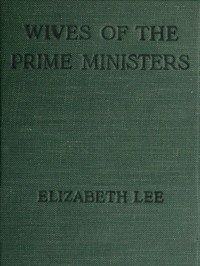
Wives of the Prime Ministers, 1844-1906 — Text and Context
(0 User reviews)
2133
Project Gutenberg
2015
Not confirmed
Great Britain -- Biography; Women -- Biography; Statesmen's spouses -- Great Britain -- Biography
Readers of public-domain and historical texts
Project Gutenberg digital edition
en
Edition facts
Words
57,485
Reading time
250 min
Text sections
17
This digital edition of Wives of the Prime Ministers, 1844-1906 — Text and Context is described by source-level measurements including 57,485 words, 4 hr 10 min estimated reading time, and 17 detected text sections.
The text analysis averages about 19.7 words per sentence, while the detected sections provide another way to judge how the source is divided.
Project Gutenberg metadata also associates the work with “Great Britain -- Biography,” connecting these edition facts with the source record’s subject description.
Source:
Project Gutenberg record #50035
Examines the lives of eight political wives from 1844 to 1906, using diaries and letters to reveal their indirect influence on British politics. Structured as individual biographical sketches, the book moves from Lady Caroline Lamb to Lady Campbell-Bannerman, highlighting each woman's social role and personal agency.
Editorial Edition Score
4.8/5
★★★★★
★★★★★
Calculated from edition completeness, EPUB availability, text structure and catalogue metadata. Not a user rating.
How this score is calculated
- Description quality20 pts
- Title & short description10 pts
- Source metadata20 pts
- Text length15 pts
- Chapters / structure15 pts
- EPUB file integrity20 pts
Total of 100 points, scaled to a 2.5-5.0 range. Editions with an empty description or a missing EPUB file are not scored.
Edition quality
Public-domain source text
Read the source text
The source text is kept in the dedicated reader, separate from this catalogue record and its commentary.
The book opens with Lady Caroline Lamb, a figure more often remembered for her literary entanglements than for political acumen. Yet the author immediately positions her within a network of influence: Lamb’s letters and diaries, quoted extensively, show her canvassing for votes and advising on strategy. This sets a pattern for the volume: each chapter draws on unpublished sources—Mrs. Gladstone’s manuscript diary, Lady Palmerston’s letters—to reconstruct a sphere of action often omitted from standard political histories.
The structure is strictly chronological by subject, from Lamb (born 1785) to Lady Campbell-Bannerman (died 1906). Within each chapter, the narrative moves from family background to marriage, then to the husband’s premiership and the wife’s social and political activities. The author frequently pauses to quote a letter or diary entry, giving the reader direct access to the women’s own voices.
Recurring Images of Influence
A striking pattern across the chapters is the repeated image of the wife as a canvasser or party whip. In the introduction, the author notes that women “could be counted on at elections to give as canvassers the most important and valuable assistance.” This claim is then substantiated in individual portraits: Lady Palmerston, we are told, “by her personal amiability… helped to strengthen the position of her husband.” Mrs. Disraeli is described as a “Parliamentary protégé” who prophesied her husband’s greatness. The language of direct versus indirect influence recurs, with the author carefully distinguishing between the two. For instance, Lady Palmerston’s influence on society is called “direct,” while her political influence is “indirect, because it worked through her husband.” This binary frames the entire collection.
Movement Between Private and Public Spaces
The narrative frequently shifts from domestic settings to political arenas. Mrs. Disraeli’s chapter begins at Bramford Speke, then moves to a party where she meets Disraeli, then to the House of Commons. The author uses these transitions to show how the women navigated both spheres. A telling detail: after Wyndham Lewis’s sudden death, Mrs. Lewis receives letters from Disraeli that mix condolence with courtship. The author reports that “friends calling to condole… were asked to congratulate her, for ‘Disraeli has proposed.’” This juxtaposition of mourning and marriage highlights the porous boundary between private grief and public ambition. Similarly, Lady Palmerston’s influence is said to work “through her husband,” implying that her social gatherings were extensions of political strategy.
The Use of Letters and Diaries as Structural Anchors
Each chapter relies heavily on quoted correspondence and diary entries, which serve as both evidence and narrative devices. For Mrs. Disraeli, the author reproduces Disraeli’s description of her as “a pretty little woman, a flirt, and a rattle,” and later a letter in which he signs “Your affectionate D.” These quotations create a sense of immediacy. The author also cites unpublished sources, such as “Mrs. Gladstone’s manuscript diary” and “letters of Lady Palmerston,” lending authority to the account. The effect is that the women’s own words—often written in private—become the backbone of the public story. This method allows the author to claim that women’s “knowledge was… obtained from the communications of the men who were their relatives and friends,” but that “the method of using it was determined by the woman herself.”
Tensions Between Biography and Broader History
The book oscillates between individual life stories and general claims about women’s political role. The introduction asserts that “few… would deny the influence that women… have wielded,” yet the chapters often focus on exceptional individuals. This creates a tension: are these women representative or unique? The author does not resolve it. For example, Lady Palmerston is described as “eminently high-minded and warm-hearted,” qualities that seem to explain her influence, but the same chapter notes that her position was so high “that no one can think she is seeking her own advancement.” This suggests that the author is aware of the limits of generalization. The reader is left to weigh the evidence for each woman separately.
Readers interested in the mechanics of influence will find this book a useful companion to standard political biographies. The excerpts from primary sources offer a rare glimpse into the private calculations of public figures. Because the chapters are self-contained, one can read them in any order, though the chronological arrangement rewards a sequential reading. Pay attention to the footnotes: they reveal the archival basis for many claims, and they occasionally point to gaps in the record that the author acknowledges.
Reading about these eight women, so often confined to anterooms while decisions were made beyond the door, I remembered my own grandmother’s letters from the war years. Her influence was unrecorded too, yet unmistakable in the family’s choices. That same quiet power glows in Scenes in the Life of Harriet Tubman — Background and Themes, where private courage reshaped public history. Both books leave me pondering the weight held on shoulders nobody photographs.
There are no reviews for this eBook.
There are no comments for this eBook.
Reader reflection
Take a moment to reflect on this book
Create a short personal record of your experience with this book.
Your progress
0
/
10
2
What was your overall reaction to the book?
3
How likely are you to recommend this book?
4
How demanding did the text feel?
5
How distinctive were its ideas or approach?
6
Was the book easy to understand?
7
Did the book give you something worth debating?
8
Did you relate to its people, ideas, or situations?
9
What is the main idea you are taking away?
10