1

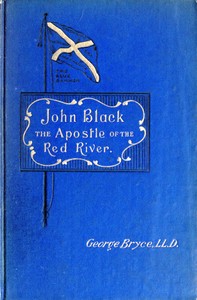
John Black, the Apostle of the Red River Or, How the Blue Banner Was Unfurled on Manitoba Prairies — Key Ideas to Explore
(0 User reviews)
1903
Project Gutenberg
2016
Not confirmed
Black, John, 1818-1882; Presbyterian Church -- Missions -- Manitoba; Missionaries -- Manitoba -- Biography
Readers of public-domain and historical texts
Project Gutenberg digital edition
en
Edition facts
Words
42,995
Reading time
187 min
Text sections
5
This digital edition of John Black, the Apostle of the Red River Or, How the Blue Banner Was Unfurled on Manitoba Prairies — Key Ideas to Explore is described by source-level measurements including 42,995 words, 3 hr 7 min estimated reading time, and 5 detected text sections.
The text analysis averages about 21.3 words per sentence, while the detected sections provide another way to judge how the source is divided.
Project Gutenberg metadata also associates the work with “Black, John, 1818-1882,” connecting these edition facts with the source record’s subject description.
Source:
Project Gutenberg record #53576
An editorial note examining the structure, recurring imagery, and movement between scenes in George Bryce's biography of missionary John Black, focusing on the interplay of domestic and public life in Red River Settlement.
Editorial Edition Score
4.7/5
★★★★★
★★★★★
Calculated from edition completeness, EPUB availability, text structure and catalogue metadata. Not a user rating.
How this score is calculated
- Description quality20 pts
- Title & short description10 pts
- Source metadata20 pts
- Text length15 pts
- Chapters / structure15 pts
- EPUB file integrity20 pts
Total of 100 points, scaled to a 2.5-5.0 range. Editions with an empty description or a missing EPUB file are not scored.
Edition quality
Read the Text
John Black was the Apostle of the Red River. He will be long remembered on the prairies of Manitoba. In 1882 he passed away, all too soon to see the remarkable rise of the country for which he had planned and worked and prayed. He had reached the age of sixty-two, and nearly half of that time he had spent on the plains of the Northwest. His name is a household word in many settlements, and his memory is revered by the white settlers and the Christian red men alike, throughout Manitoba, Saskatchewan, and Alberta.
BIRTHPLACE AND CHILDHOOD.
On a visit to Scotland, a few years ago, the writer of these sketches spent a few pleasant days on the Scottish border. He was guest of a former Canadian minister in the pretty parish on the river Esk, of which Sir Walter Scott speaks, where "there was racing and chasing on Cannobie Lee." One day a delightful drive led along the winding valley of the river to the town of Langholm, to attend the Presbytery meeting there. After the business was over the Presbytery dinner was held, with all the forms of the "olden time." While at dinner one of the ministers addressed the writer: "Oh, I'm the minister of Eskdale Muir, where your first minister on the Red River, the Rev. John Black, was born." It was interesting to note that the pioneer of the western wilds was not forgotten in the place of his birth.
On the 8th of January, 1818, John Black was born. He was the son of William Black and Margaret Halliday, Eskdale shepherd farmers, who lived on the farm of Garwaldshiels. His ancestors had originally dwelt in the neighboring parish of Ettrick, and some of them had been warm friends of the godly minister there, Thomas Boston, whose works, "Fourfold State" and the "Crook in the Lot," were well-read books in many a Scottish home.
The farm of Garwaldshiels was a lonely spot. Its steading, as the farm buildings are called in Scotland, was two miles from any other. Indeed, the whole parish of Eskdale Muir is mountainous and sparsely settled, its inhabitants being chiefly sheep farmers and shepherds. In the church on Sunday it is said the collie dogs were formerly almost as many as the men. Sometimes the dogs became restless, and were apt to disturb the minister.
The shepherds of the south of Scotland are noted as a most intelligent lot of men. Their quiet life on the hills with their flocks gives them time for thought. They are great readers, and undertake to master the deepest books. This is so uncommon among humble people, such as they, that visitors from outside Scotland are greatly struck by it. It is said that a Yorkshire wool merchant once visited the parish of Eskdale Muir on business, and was so surprised that he said: "They are the strangest people that ever I saw; the very shepherds talk about deep stoof (stuff)."
The minister of this parish who baptized John Black was in knowledge a leader of his people, for he was the author of a work called "Antiquities of the Jews," which was formerly very well known.
About the time of the birth of John Black, the shepherds of the border parishes had gained another accomplishment. Many of them undertook to write poems. The reason of this was that a few years before, in the parish of Ettrick, a remarkable man, James Hogg, known as the "Ettrick Shepherd," had written a number of very beautiful poems, which had been published and widely read. This led many of the shepherds to imitate one of their own number. Some of the poems produced were poor, but others were uncommonly good. It was strange to see such a burst of song in a people so severe in their thought.
Born of such a stock, and brought up in such surroundings, it was no wonder that the boy of Eskdale Muir should early show a disposition to study. He had a great thirst for knowledge, even as a child, and especially for Bible stories and religious thoughts. In early childhood, we are told, he was noted for his affectionate disposition. He was a serious boy, and even early in life, at the age when most children are thoughtless and unconcerned, he showed a desire to become a follower of Jesus Christ.
George Bryce's biography of John Black moves between two poles: the intimate domestic sphere of the Kildonan manse and the expansive public duties of a frontier missionary. The narrative repeatedly returns to the manse as a site of hospitality, mourning, and community formation, while also tracing Black's journeys across the prairies and his engagements with Hudson's Bay Company officers. This oscillation between home and horizon structures the book, creating a rhythm of withdrawal and outreach.
Domestic Scenes as Narrative Anchors
The biography devotes considerable attention to the manse at Kildonan, describing it as a place where “the bountiful table … was rarely without visitors.” Bryce lingers over the details of household life: the marriage to Henrietta Ross, the naming of a son after Robert Burns, and the death of that same child by accident, which “cast a deep shadow over the Kildonan manse.” These domestic episodes are not mere interludes; they serve as emotional anchors that ground Black's public work. The death of Mrs. Black in 1873 is recalled with a precise meteorological detail—“one of the coldest and fiercest days of the cold years of the early seventies”—linking personal grief to the harshness of the prairie environment. By repeatedly returning to the manse, Bryce suggests that the missionary's effectiveness depended on a stable home base, even as his duties pulled him outward.
Movement Across the Landscape
Bryce emphasizes the physical journeys that defined Black's career. The preface describes him crossing “the trackless prairies of the north-western States” to reach “the northern and secluded plains of Rupert's Land.” This movement is not merely geographical; it carries symbolic weight, as Black is portrayed as a figure who brings the “Blue Banner” of Presbyterianism to a new territory. The narrative traces his path from Montreal to Fort Garry, then to the scattered settlements along the Red River. Even within the settled area, movement is constant: Black travels five miles from Kildonan to Fort Garry to hold the first Presbyterian service on the site of future Winnipeg. The biography thus uses spatial progression—from eastern Canada to the frontier, from fort to parish—as a structural principle, mirroring the expansion of the mission field.
Recurring Images of Hospitality and Kinship
Hospitality emerges as a key motif. The manse is repeatedly described as a place of welcome for travelers, newcomers, and Hudson's Bay Company officers. Bryce notes that “hardly a chief factor or trader from the interior visited Fort Garry, who did not think it a duty and a pleasure to take the five miles journey … to visit the representative of the church of his fathers.” This hospitality extends to kinship networks: Black's marriage to Henrietta Ross, a daughter of the land with Okanagan Indian ancestry, creates a bridge between Scottish settlers and Indigenous communities. The biography also highlights the role of the “McCallum School” at St. John's in educating Miss Ross, underscoring the importance of educational institutions in the settlement. These recurring images of welcome and connection suggest that Black's influence depended as much on personal relationships as on formal religious duties.
Public Duties and Moral Authority
Bryce devotes a section to Black's public roles, describing his involvement with the Bible Society, temperance reform, and joint prayer meetings with Church of England ministers. The biography notes that Black “never flinched in his duty” when dealing with church discipline, but “aimed at the reclamation of the wrongdoer” rather than punishment. This emphasis on moral suasion over coercion aligns with the broader theme of building a community through persuasion and example. The text also records Black's correspondence with scattered Hudson's Bay Company men, extending his pastoral reach far beyond the immediate parish. By cataloging these activities, Bryce constructs a portrait of a minister whose authority was exercised not from a pulpit alone but through a network of personal contacts, letters, and collaborative efforts across denominational lines.
Readers attentive to the interplay of domestic and public scenes will find that Bryce's biography gains coherence from these recurring movements. The book does not offer a straightforward chronological account; instead, it weaves together episodes of home life, travel, and institutional work. This structure invites reflection on how frontier missionaries balanced the demands of family and vocation, and how the physical landscape shaped both their opportunities and limitations.
That rainy afternoon, I kept returning to how Bryce moved between Black’s quiet hearth and the noisy council chamber. The same tension—private conviction meeting public duty—lingered in my mind afterward. It felt familiar, though I couldn’t place it. Later, while shelving, my hand stopped on The private journal of Judge-Advocate Larpent — Story, Setting & Ideas. Different frontier, but the same strange ache of a man caught between his own conscience and the law’s demands.
There are no reviews for this eBook.
There are no comments for this eBook.
Reader reflection
How will you remember this book?
Save your reaction, strongest insight, and memorable passage.
Your progress
0
/
10
2
How much did you enjoy the reading experience?
3
Would you recommend this book to another reader?
4
What was the reading difficulty like?
5
Did the book meet your expectations?
6
Did the book offer a fresh perspective?
7
What did you appreciate most?
8
Did any part of the book feel personally relevant?
9
Which lesson or insight stayed with you?
10